
Dr. James Ko's commitment to excellence shines through his achievements as a Doctor of Dental Surgery, paired with a Master's in Science, both earned from the esteemed University of Toronto. His research has delved into the realm of Biomaterials, leading to a published paper focusing on the interplay between dental implant surfaces and bone. Dr. Ko's patient-centred approach is exceptional, as he invests time in building strong connections with patients, alleviating their concerns, and offering practical strategies to enhance their dental well-being. Embracing a holistic approach, he caters to patients of diverse age groups.
How Much Does Sedation Dentistry Cost in Ontario?
Sedation dentistry costs in Ontario depend on the method, how long you stay sedated, the dental work done during the visit, and what a plan pays toward the visit. Nitrous oxide is commonly $75 to $150 per 15 minutes. Oral sedation is commonly $150 to $500. IV sedation is commonly $300 to $900 per hour, or about $500 to $1,000 for a session. General anesthesia is commonly $1,200 to $2,500 or more.
Those ranges aren't a flat add-on you can apply to any tooth. Nitrous oxide is billed based on how long the gas is used. Oral sedation follows the drug and the length of the visit. IV sedation and general anesthesia add monitoring, recovery, and a provider authorized for that level. A neighbour's all-in number is useless until you know which of those four it priced, and for how many minutes.
The dental procedure is billed separately from the sedation. A short filling and a surgical extraction do not use the same sedation time. OHIP does not pay for dentistry done in a dental office, and a plan may still leave a gap between its payment and the invoice. Markham Smile Centre, at 1 Raymerville Drive in Markham, offers nitrous oxide, oral sedation, IV sedation, and general anesthesia. The estimate should name which one is planned.
Key Takeaways
- The sedation fee and the procedure fee are two lines. Comparing only one of them hides the real visit cost.
- Nitrous oxide is commonly $75 to $150 per 15 minutes. A flat visit fee from another office is a different unit, not a cheaper version of the same clock.
- Oral sedation is commonly $150 to $500. It is a planned pill and a drowsy visit, not the monitoring setup used for IV sedation.
- IV sedation is commonly $300 to $900 per hour, and a full session is often quoted around $500 to $1,000. General anesthesia is commonly $1,200 to $2,500 or more.
- OHIP does not cover dentistry in a dental office. Hospital dental surgery is a narrower, separate benefit, and tooth removal in hospital needs prior approval.
- The Canadian Dental Care Plan can pay toward sedation only with an eligible procedure. Deeper methods need preauthorization, and you can still owe a co-payment plus any gap to the fee guide.
- A quote you can use names the method, the minutes, the procedure, and what you pay if the plan pays nothing.
Find our Dental Clinic Near You
What changes the sedation dentistry cost in Ontario
Four things affect sedation dentistry cost: how deep the sedation is, how long it lasts, what dental work is done during that time, and who is authorized to provide it. Ontario does not publish one public office rate, so the bands below are typical ranges for the sedation line itself. Your own estimate is the number that applies, and a line that says only "sedation" is not a figure you can compare.
The level of sedation
Minimal sedation keeps you awake and able to answer. Nitrous oxide, breathed through a nose mask with oxygen, is the usual minimal option. The effect is designed to clear within minutes after the mask comes off. Oral minimal sedation uses a single sedative dose that relaxes you without causing deep sleep.
Moderate sedation makes you drowsy. You can still respond, and you may not remember much of the visit. General anesthesia is a controlled unconscious state. A mask of gas doesn't need the same recovery setup as a vein, and a vein doesn't need the same setup as general anesthesia. If two offices quote very different figures, ask which rung they priced.
How long you are sedated
Duration is the second lever. A twenty-minute filling does not use the same amount of gas, monitoring time, or recovery chair as a two-hour surgical visit. Offices that follow a fee guide usually tie the sedation code to time. If the procedure runs long, the sedation line can move with it.
Ask whether the estimate is for a set block of time and what a further block costs. A figure that assumes thirty minutes is not low if the surgery needs ninety. The wait for a pill, placing an IV line, and recovery are part of the fee even when the procedure itself was short.
The dental work underneath
The third lever is the dentistry itself. Sedation does not replace the fee for the filling, extraction, root canal, or surgery. An erupted tooth may need only a short period. An impacted tooth, or several teeth in one visit, will take more time and often a deeper method.
A common mistake is to add a neighbour's extraction price to a sedation figure from a different kind of visit. Those are two different bills. Keep the procedure on its own line. A short nitrous block and a long IV morning are not substitutes.
Who is allowed to provide it?
The fourth lever is the standard the provider has to meet. In Ontario, a dentist who administers sedation or general anesthesia in a dental facility must hold a current sedation authorization from the Royal College of Dental Surgeons of Ontario. Authorizations to administer sedation expire annually on March 31 . The dentist must renew that authorization to continue providing it. You can confirm it on the College public register before you book.
Deeper care also needs a facility permit. Oral moderate sedation, parenteral conscious sedation, deep sedation, and general anesthesia need a current permit. Minimal sedation alone, nitrous oxide with oxygen or a single oral sedative does not. The dentist still needs authorization. A physician who gives anesthesia in a dental office must also be registered with the College of Physicians and Surgeons of Ontario. If the estimate does not name the provider and the level, ask before you compare the fee.
| Sedation method | What you should expect | Typical range in Ontario |
|---|---|---|
| Nitrous oxide | Awake, effect fades in minutes | $75 to $150 per 15 minutes |
| Oral sedation | Drowsy, still responsive | $150 to $500 |
| IV sedation | Deeper, often little memory of the visit | $300 to $900 per hour |
| General anaesthesia | Fully unconscious | $1,200 to $2,500 or more |
Match the row to the visit you actually need, then read the clock on the estimate. Some offices bill nitrous oxide by the 15-minute block, and others publish a flat visit fee closer to $50 to $100. A $75 block and a $75 visit are not the same product. The IV band of $300 to $900 per hour overlaps a session quote of about $500 to $1,000, and a longer IV visit can reach about $1,500.
"Cost should not be the only factor. Experience and safety in sedation are non-negotiable, especially for complex cases," says Dr. James C.H. Ko, DDS, MSc, Markham Smile Centre .
What nitrous oxide sedation and oral sedation dentistry cost
These two are the lighter end of sedation dentistry , priced that way because you stay responsive and recovery is shorter. Facility rules are lighter than for a vein or general anesthesia, and the fee is still separate from the filling or extraction. They are a poor substitute for general anesthesia when the work needs an unconscious patient.
Nitrous oxide sedation
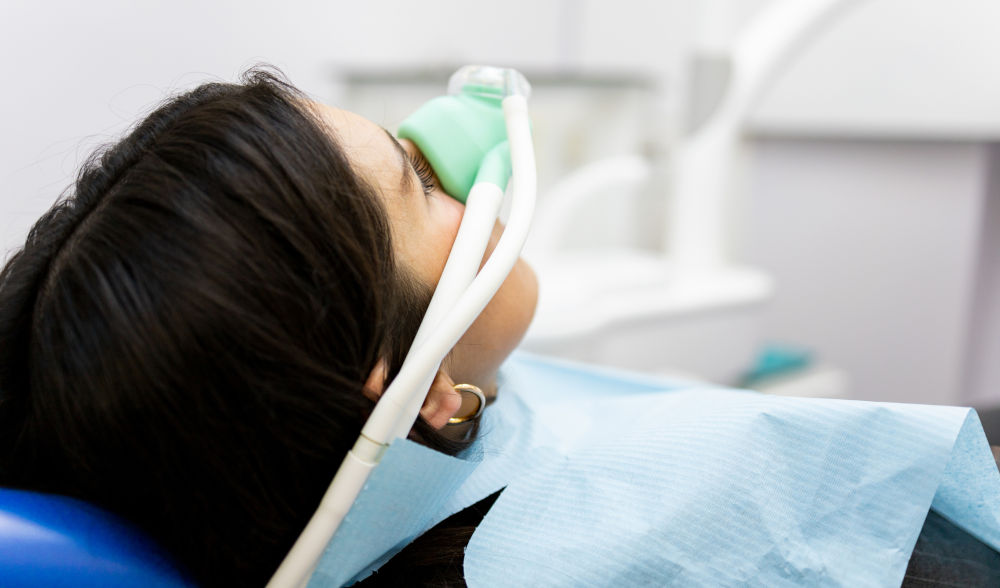
Nitrous oxide sedation mixes the gas with oxygen through a nose mask. You feel calmer within a few minutes, and you can still talk and follow instructions. When the mask comes off, the effect is meant to be gone within minutes. You do not need a driver after nitrous oxide alone, once you feel back to yourself.
The charge follows the time the gas is running. At $75 to $150 per 15 minutes, three blocks at the top of that band is $450 before the dentistry. Ask for the minutes the estimate assumes. A flat fee near $50 to $100 is a different unit, and it stops matching a block price once the appointment runs long.
Nitrous oxide will not cover a long surgical appointment that already needs IV sedation. Settle the method before you arrive so you are not billed for gas and then for a second setup on the same day.
Oral sedation dentistry
Oral sedation dentistry uses a sedative you take by mouth before the appointment, at a dose chosen for you. The aim is drowsiness and a quieter visit, not a hospital sleep. Some people doze. You can usually still be woken and can still respond. You have to take the pill early enough for it to work, so the appointment is longer than the dentistry alone.
The typical range is $150 to $500, covering the drug, the wait for it to start, and the check before you leave. A figure near $100 to $150 is the low end of that range for a very simple visit. Feeling very sleepy does not turn the visit into IV sedation. If the plan is one pill, the quote should say one pill.
The drug lasts past the chair, so do not plan a drive or a shift until you know how that dose behaves. An escort is required after IV sedation and general anesthesia. For a pill, ask at the consultation, because the dose changes how steady you will be.
Adding nitrous oxide on top of a pill can change the level, not just add a few dollars of gas. Minimal sedation is nitrous oxide alone or oral minimal sedation alone. If the estimate jumped when gas was added, ask whether the visit is now oral moderate sedation, because that level needs a facility permit.
What sleep dentistry cost covers on the day
Sleep dentistry cost is the price of a deeper visit: IV sedation or general anesthesia, not a mask of gas. You are paying for a monitored session, and the drug is one part of the invoice, not the whole of it. People use "sleep" for a doze on a pill and for a general anesthetic, so only the method line tells you which clock and which recovery rules you are buying.
IV sedation
IV sedation, also called parenteral conscious sedation, puts the drug into a vein. It works quickly, and the dose can be adjusted while you are in the chair. You are not under general anesthesia. You may drift, you may not remember the procedure, and you should still be able to respond to a request.
The per-hour range is $300 to $900. A session quote is often $500 to $1,000, and a longer full IV visit can reach about $1,500. Read the unit before you decide one office is twice the price of another. A $600 hourly rate for ninety minutes is $900, which can match a session fee that already includes those ninety minutes.
The visit needs a provider authorized for that level, someone watching your breathing, heart rate, and oxygen, and time afterward before you leave. You cannot drive yourself home. Plan an escort who can stay until you are discharged. Recovery time is part of the fee, even if you feel awake sooner than expected.
General anaesthesia
General anesthesia is a fully unconscious state, reserved for extensive work or for a patient who cannot be treated with a lighter method. It needs an authorized provider and a permitted facility. The typical range is $1,200 to $2,500 or more. Some offices start near $1,000 or price it by the hour from about $1,200, so ask whether the number is a session or an hourly rate.
What the appointment fee is actually buying
The sleep dentistry line usually covers more than a vial of medicine. Read the estimate against this list, and ask about anything missing. If a low quote dropped one of these items, it may be pricing a lighter method under a heavier name.
- The assessment. Your medical history and the decision that this level is appropriate belong before the day.
- The drug and the start. Induction, whatever the route, is part of the sedation fee on an eligible plan code and should be visible on a private quote too.
- Monitoring. We monitor breathing, heart rate, and oxygen throughout the procedure, not just at the start.
- Recovery. You stay until you are fit to leave with an escort. That chair time is not free because the drilling has stopped.
- The trip home. You do not drive after IV sedation or general anesthesia. The quote should say so in plain words.
The dentistry is still extra. One erupted tooth and several impacted teeth are not the same procedure fee, even when both use IV sedation. Bone removal keeps you sedated longer, and the sedation clock runs with that time.
How the length of treatment changes the dental sedation cost
The dental sedation cost is the sedation line plus the dentistry, not a flat percentage added to every code. Longer, more surgical work uses more sedation time and is more likely to need a deeper method. The ranges that follow are typical combined totals, not a quote, and your estimate replaces them once the method and the minutes are known.
One tooth or a longer surgical visit
Read a combined total across the method, not as one average called the cost of sedation. The jump from no sedation to oral sedation is the pill and the longer visit. The jump to IV sedation is the setup, the clock, and the recovery. The tooth did not get harder. The service around it changed.
| Procedure | Without sedation | With oral sedation | With IV sedation |
|---|---|---|---|
| Wisdom tooth extraction, one tooth | $250 to $400 | $400 to $700 | $600 to $1,200 |
| Root canal treatment | $700 to $1,000 | $850 to $1,300 | $1,200 to $1,800 |
| Two to three fillings | $300 to $600 | $500 to $900 | $800 to $1,400 |
A small filling, if it is done under sedation at all, usually stays at the nitrous oxide or oral end. The jump in the combined column is the method and the time, not a harder tooth. An impacted tooth during wisdom teeth removal needs a flap, sometimes bone removal, and stitches, so the sedation is priced for that longer operation.
Several surgical sites in one deeper session can cost less in sedation time than the same teeth split across four IV mornings, because you pay for one induction and one recovery. The dental fee is larger because more teeth are treated. A dental surgery estimate should say how many sites are included. "Surgery with sedation" can mean one wisdom tooth or a longer surgical morning.
One deeper session or several lighter visits
Splitting treatment into several short visits can keep each visit on nitrous oxide or a pill. You pay a smaller sedation line each time, and you may pay it more than once. Three oral visits at $250 each are $750 of sedation before a single filling fee is counted, plus more trips and more recovery days.
One IV or general-anesthesia session raises that day's sedation line and clears more dentistry in one recovery. Where a plan allows only one deeper session in a year, that session is also how the necessary work gets finished. Choose by the work and your health, not by the smallest single number on the first page of the estimate.
When a pill and IV sedation dentistry are priced for different jobs
Oral sedation and IV sedation dentistry solve different problems, so comparing a single sedation fee is misleading. One is a pill timed before you sit down. The other is a vein, a monitor, and a recovery period. The gap between them is the setup, not a markup on the same drug.
Use oral sedation when you can take a pill in advance, and the dentistry can be done while you are drowsy but responsive. The $150 to $500 band is the usual step when nitrous oxide is not enough and a full IV session is more than the procedure needs.
IV sedation fits longer or more invasive work, a gag reflex that stops treatment, or fear that does not settle with a pill. At $300 to $900 per hour, a two-hour surgical morning is $600 to $1,800 of sedation before the teeth are counted. Compare that with a $300 oral visit only when both quotes are for the same work. IV sedation for a visit with nitrous oxide would have been added, adding a recovery you did not need.
What OHIP and the Canadian Dental Care Plan pay
What you pay is the estimate minus what a plan actually approves. OHIP, a private dental benefit, and the federal plan are three different rules. The code, the minutes, and the reason for that level must match, or the sedation line comes back to you.
OHIP and hospital dental surgery
OHIP does not cover dental services provided in a dentist's office . That includes sedation given there. A health card does not pick up nitrous oxide, a sedative pill, IV sedation, or general anesthesia in a dental clinic. If someone says OHIP will pay the sedation at the clinic, ask which insured service they mean. Office dentistry is on the list OHIP does not cover.
A narrower hospital benefit exists. OHIP covers eligible dental surgery in hospital, such as fracture repair, tumour removal, reconstructive surgery, and medically necessary tooth removal. Tooth removal in hospital needs prior approval. That route is not an office IV appointment.
Private plans and predetermination
A private dental plan is a contract. Some pay a portion of sedation when the dentist documents why a lighter visit was not possible. Some treat nitrous oxide as comfort care. Some pay the procedure and pay nothing for sedation. None of those patterns is a provincial rule.
The office estimate and the insurer's predetermination are different papers. Get both before a long IV appointment. A predetermination can still change if the plan year rolls over, you have used the annual maximum, or the claim code doesn't match the approved code. Bring the method and the minutes into that request, and ask what you pay if the claim comes back at zero.
The Canadian Dental Care Plan
The Canadian Dental Care Plan is a federal program. Claims run through Sun Life. It is not OHIP, and it does not pay the full invoice. Sedation is considered only with at least one procedure the plan covers. Nitrous oxide, a single oral sedative, or the two together do not need preauthorization within 4 sessions in any 12-month period , when the clinical rules are met.
From birth to age 11, nitrous oxide or oral sedation is for treatment that cannot be done in an ordinary visit without sedation. From age 12, it is for treatment that was tried and not finished without sedation, or that cannot be attempted because of a significant mental or physical impairment. The plan does not define that impairment in a fixed list. Extra sessions above four can be considered with a written reason.
Deeper methods are tighter. Parenteral conscious sedation, deep sedation, and general anesthesia need preauthorization, and each is limited to one session in a 12-month period unless a further session is approved. The plan encourages finishing the necessary work in that one session. In an emergency, a post-determination can be considered if coverage could not be checked first. The plan's fee includes the medication and the induction, and it can still sit below the dentist's fee.
Markham Smile Centre follows the Ontario Dental Association fee guide rather than the plan's reimbursement schedule, and bills the plan directly through Sun Life. If you are covered, you can owe an income-based co-payment and the difference between the plan's fee and the guide. That portion is due at the appointment.
- Under $70,000. The plan pays up to 100 percent of its own fee, so the co-payment on that fee is zero. You may still owe the difference between that fee and the Ontario Dental Association guide.
- $70,000 to $79,999. The plan pays up to 60 percent of its fee. The co-payment is 40 percent, plus any gap to the guide.
- $80,000 to $89,999. The plan pays up to 40 percent of its fee. The co-payment is 60 percent, plus any gap to the guide.
Crowns supported by implants, and implant-related procedures, are not covered. Do not expect the plan to fund sedation whose only purpose is implant surgery. Sedation attached to a covered extraction is a different request, and cosmetic treatment such as whitening or veneers is also outside the plan.
What a cost of sedation dentistry quote should include
A cost of sedation dentistry quote is useful when you can read it without guessing. Five items belong on the estimate you are asked to accept. If one is missing, ask for it before you compare that quote with any other.
- The method. Nitrous oxide, oral sedation, IV sedation, or general anesthesia, in those words. "Sleep" and "sedation" are not methods.
- The clock. How many minutes the fee assumes, and what another block of time costs if the procedure runs long.
- The dentistry. The procedure on its own line, so you aren't comparing a sedation-only figure with someone else's all-in price.
- The plan portion. What is expected from a private plan or the federal plan, and what you pay if the claim is denied.
- The recovery. Whether you need an escort, whether you can drive, and how long to keep the rest of the day clear.
A quote that looks cheap because it dropped the recovery time, or because it priced nitrous oxide while the clinical note says IV sedation, is not a saving. It is a different service. Ask for it to be rewritten before you use it as the basis of a decision. Put the gross fee, the plan's expected portion, and your portion in three figures, not one blended package.
"Patients are often surprised to learn that IV sedation is not just about the medication. It is about the team, the equipment, and the recovery time. That is where most of the cost comes from," says Dr. Amir Guorgui, BSC, DMD, MACSD, Markham Smile Centre .
Confirm the dentist's sedation authorization is current and, past minimal sedation, that the facility permit covers that level. A cold, a medication change, or a blood pressure reading can postpone deeper sedation, so ask whether a late change has a fee. Bring every medicine you take, including anything for anxiety or sleep, because those drugs can change the dose and sometimes the method.
What you are paying for when sedation is part of the visit
The fee is the method, the time, and the work done while you are sedated. A short gas block and a monitored morning that can pass $1,200 before the dentistry is added are different care. The procedure stays on its own line, so a wisdom tooth and a root canal don't become the same bill just because sedation was added.
OHIP does not pick up the office visit. A private plan might pay part of a code, or none of it. The Canadian Dental Care Plan can pay toward sedation that meets its rules, within four lighter sessions a year or one deeper session, and you can still owe a co-payment and any gap to the fee guide. Separate the lines, then decide.
Ask Markham Smile Centre for that written split before you book. If the balance is what stands in the way of treatment, dental payment plans can spread it into monthly payments instead of putting the care off.
Frequently Asked Questions
Why do dentists charge so much for sedation?
Deeper sedation is a monitored session, not a comfort extra on a short visit. You are paying for an authorized provider, a facility that meets the provincial standard, the time, and the recovery. A gas mask at $75 to $150 per 15 minutes doesn't include that setup, so you shouldn't compare the two prices as one service.
How much do dentists charge for sedation?
Ontario does not publish one office rate. Nitrous oxide is commonly $75 to $150 per 15 minutes, oral sedation $150 to $500, IV sedation $300 to $900 per hour, and general anesthesia $1,200 to $2,500 or more. The figure still moves with the minutes. A number with no method and no clock is not a price you can use.
Is dental sedation worth it?
It earns its fee when fear or a strong gag reflex keeps treatment from getting done, and when the method matches that problem. It is a poor buy when a lighter option would have finished the same work. Deeper sedation is used because the risks are higher, which is why the monitoring is part of the price.
How much does sedation dentistry cost in Canada?
There is no national price list. In Ontario, office sedation is not an OHIP benefit, and the working bands run from about $75 for a short gas block to $2,500 or more for general anesthesia. The Canadian Dental Care Plan can pay a portion when you qualify, and the visit meets the clinical and session rules. The figure that matters is your estimate for your method, after your plan responds.
Will I be asleep during sedation dentistry?
Not always. Nitrous oxide leaves you awake. Oral sedation makes you drowsy, and you may doze, but you can usually be roused. IV sedation often blunts memory of the visit while you stay responsive. Only general anesthesia puts you fully unconscious.
How much does it cost to be put to sleep at the dentist in Canada?
Being fully asleep means general anesthesia, or a deep sedation that feels like sleep. In Ontario, that anesthetic portion is commonly $1,200 to $2,500 or more, before the dental procedure. It needs an authorized provider, a permitted facility, monitoring, and recovery with an escort. Get the method and the time in writing, then ask your plan if that code is eligible.
Does OHIP cover sedation at the dentist?
No. OHIP does not cover dental services in a dentist's office, including sedation given there. It can cover certain dental surgery done in a hospital, and medically necessary tooth removal in a hospital needs prior approval. That hospital route is not an office IV appointment.
Does the Canadian Dental Care Plan cover IV sedation?
It can, with preauthorization, and only if you have at least one covered procedure. IV sedation is limited to one session in a 12-month period unless a further session is approved. The plan's fee includes the drug and the induction, and you can still owe a co-payment plus any gap to the dentist's fee.


See what our patients are saying:
Everyone here is very friendly and provides excellent care. I received a full exam on my first visit, and everyone took time to answer my questions and ensured I felt comfortable the entire time - exactly what you want when visiting the dentist. I highly recommend Markham Smile Centre for anyone looking for great dental care.

There is an ample parking space before you get into the office. The receptionists welcome us friendly with proper COVID-19 procedures in place. The staff worked with patient very patiently and professionally. My teeth cleaning was done by Ying, she explained every detail to me and I did not feel any pain or uncomfortable at all. Thanks to the best team !
It's been a while since I've been to a dentist but I'm trying to get back on track with health in general. Overall it was great going to Markham Smile Centre! The receptionist (I believe she was Kim) was friendly. The hygienist, Ying, was attentive and gentle during the cleaning; x-ray tech (forgot her name, sorry!) was great too. Dr. Sara Riad explained things with good detail. Looking forward to going back!
I was someone who was nervous and anxious about visiting the dentist, but the team at Markham Smile Centre has made me feel SO comfortable. Kim is so patient and helpful and Dr. Hwang and Rory are both so professional and wonderful. They thoroughly explain the procedure to make you comfortable beforehand and are very gentle. I now look forward to visiting the dentist!
I found this place on a whim when I was looking for a new dentist in Markham. My hygienist ying was super nice and her cleaning was very gentle yet thorough. I saw Dr.Jason and he was very nice and informative in regards to what needs to be done and provided me with all the information I needed to make a choice. Would recommend this place to anyone looking for a new dentist, they’re accepting new patients!!
I have been to many dentists in my life, Dr. Jason is easily the best dentist I have ever been too. He does everything he can to make you comfortable no matter the procedure and is a true professional, as does all the staff at Markham Smile Centre. Truly an amazing dentistry
The clinic was clean and the staff was very polite. I particularly liked the fact that everything was explained to me before going in for the procedure so I knew what to expect at each step. The dental hygienist who did the cleaning for me was also very gentle and took my concerns into consideration. I will definitely recommend them.
Upon arriving to the Markham Smile Centre, my son and I were greeted with a warm welcome by the receptionists. The hygienists and Dentist were very gentle and transparent with what they were doing. The hygienist that worked on my 9 year old son was patient and very friendly with him, which helped ease his nerves. Our overall experience was A+.
Since I was little, I have always hated going to the dentist... Its always uncomfortable and unpleasant. These days, visiting the dentist isn’t so bad! Dr Jason, Rory, and the lovely staff at reception make the experience 100x better. I have had absolutely no issues with the gum graft and cleanings that I’ve gotten done here. Everyone is incredibly friendly and helpful, even when I’m calling in or emailing a hundred questions :). I would highly recommend Markham Smile Centre.
Love this place! All the staffs are friendly and Professional and I mean all, cause I've been to most of their office, Markham , Stouffville, North York, and Maple. Dr. Ko is very professional and patient. Whenever I have questions and concerns he would always reply me . I would say this this dental office take care of you all the way. I would highly recommend everyone to come here for any dental works. =)


