
Dr. James Ko's commitment to excellence shines through his achievements as a Doctor of Dental Surgery, paired with a Master's in Science, both earned from the esteemed University of Toronto. His research has delved into the realm of Biomaterials, leading to a published paper focusing on the interplay between dental implant surfaces and bone. Dr. Ko's patient-centred approach is exceptional, as he invests time in building strong connections with patients, alleviating their concerns, and offering practical strategies to enhance their dental well-being. Embracing a holistic approach, he caters to patients of diverse age groups.
Chipped or Cracked Tooth? What to Do Right Now and What Your Dentist Can Fix
If you have just chipped or cracked a tooth, rinse your mouth with warm water, find the broken piece and keep it moist in milk, cover any sharp edge with dental wax or sugarless gum, and call a dental office within 24 to 48 hours. Most chips are repaired in a single visit with tooth-coloured bonding. Larger breaks need a crown, and a crack that has reached the nerve needs root canal treatment before rebuilding the tooth. Almost every chipped or cracked tooth can be fixed. How quickly you're seen determines how simple the repair will be, because a crack left under daily chewing pressure keeps travelling deeper into the tooth.
Key Takeaways
- In the first hour: rinse with warm water, keep any fragment moist in milk, apply a cold compress to the outside of the cheek, cover a sharp edge to protect your tongue, and chew on the other side until you are seen.
- Chipped teeth are the most common dental injury, and most are repaired either by bonding a tooth-coloured filling or by reattaching the broken piece of enamel.
- Pain is a poor guide to severity. Enamel has no nerve, so a chip can feel like nothing at all while still having opened a path into the dentin. Only an examination tells you which kind you have.
- Treatment depends on two things: how much tooth structure is gone and whether the pulp is involved. Options range from one-visit bonding to veneers, crowns, root canal treatment, and, in rare cases, extraction.
- In Ontario, bonding generally runs about $150 to $600 per tooth and a crown about $1,000 to $2,500. Insurance is far more likely to cover restorative work after an injury than treatment done purely for appearance.
- Patients in Markham and across York Region can be assessed the same day at Markham Smile Centre if a tooth breaks, especially if there is pain, swelling, or a sharp edge cutting the tongue.
Find our Dental Clinic Near You
What to Do Right Now: The First Hour After You Chip a Tooth
The first hour is not about fixing anything. It is about protecting the exposed tooth, preserving the broken piece in case you can reuse it, and staying comfortable until a dentist can look at it. The steps below cover almost every situation, from a corner chipped off a front tooth to a molar that has broken while eating.
Step by Step
- Rinse gently with warm water. This clears away debris and lets you feel the edge of the break with your tongue. Avoid very hot water, which can be painful if dentin is exposed.
- Find the broken piece and keep it moist. Milk is the best storage medium, and saliva works too. Do not let it dry out in a tissue and do not scrub it clean. If the break is clean and the fragment is intact, your dentist may be able to bond it back onto the tooth.
- Control any bleeding with steady pressure. Fold a piece of clean gauze, place it over the area, and hold firm pressure for about ten minutes without lifting to check.
- Apply a cold compress to the outside of the cheek, roughly 15 minutes on and 15 minutes off. This limits swelling and dulls the ache.
- Cover a sharp edge. Press a piece of orthodontic wax or softened sugarless gum over the jagged corner to keep it from slicing your tongue or the inside of your cheek before your appointment.
- Take over-the-counter pain relief as directed on the packaging. Ibuprofen is usually the more effective choice because it reduces inflammation and pain.
- Switch to soft food and chew on the opposite side. Every bite on a damaged tooth acts as a wedge on the break.
- Call a dental office and describe exactly what happened, how big the break looks, and whether you have the fragment. That description is what determines how urgently you are booked in.
What Not to Do
The Ontario Dental Association is reassuring on the main point: chipped or broken teeth can be saved most of the time . What narrows your options is a short list of well-meaning reactions in the hours before you are seen.
- Do not apply heat to the jaw. A heating pad or hot water bottle increases blood flow to an already inflamed area and intensifies the pain.
- Do not place an aspirin tablet against the gum. It does nothing for the tooth and chemically burns the soft tissue it touches.
- Do not file, sand, or otherwise smooth the edge yourself. You cannot see how close the break is to the nerve, and removing more enamel takes away the surface a dentist needs for bonding.
- Do not use any household adhesive to stick the piece back on. Superglue is toxic to pulp tissue and contaminates the fracture surface, which frequently turns a repairable break into an unrepairable one.
- Do not treat the absence of pain as permission to wait. Comfort and severity are only loosely related, which is the single most common reason a small chip becomes a large problem.
Is a Chipped Tooth a Dental Emergency?
Some broken teeth need to be seen within the hour, and some can reasonably wait a week. The difference is rarely about the size of the visible chip. It depends on whether the inner layers of the tooth are exposed, whether soft tissue is being injured, and whether there are signs of infection. The table below sets out how dentists in Ontario generally triage these cases.
| What has happened | What you are likely to notice | How soon you should be seen |
|---|---|---|
| Small chip, smooth edge, no sensitivity | A rough spot your tongue keeps finding | Within a week, at a regular appointment |
| Chip with a sharp or jagged edge | The edge catches and irritates the tongue or cheek | Within 24 to 48 hours |
| Chip with sensitivity to cold or air | A brief sharp zing that fades quickly | Within 24 to 48 hours |
| Large break showing a yellow or pink centre | Constant ache, pain on pressure | Same day |
| Erratic pain when you release a bite | Pain comes and goes, hard to localize | Within a few days, same day if severe |
| Break with facial swelling, fever, or night pain | Throbbing, swelling, bad taste | Urgently, same day |
| Adult tooth knocked out completely | The tooth is out of the socket | Within 30 to 60 minutes |
The first row is worth reading twice. Enamel contains no nerve endings, so a chip confined to enamel produces no symptoms, and that silence tells you nothing about depth. If the break has reached the dentin underneath, thousands of microscopic tubules now connect the outside world to the pulp, and bacteria travel that route whether or not you can feel it happening.
Cracks are the same puzzle in a different form. In the largest study of its kind, 209 dentists followed 2,601 patients with a cracked back tooth for three years, and 78 of those teeth, or 3%, went on to fracture, while 12% of the untreated ones showed the crack spreading . In other words, most cracks stay put, which is exactly why a dentist monitors some and restores others rather than crowning everything on sight. The catch is that deciding which category a tooth belongs in requires an examination. A short appointment and an X-ray settle it in minutes, which is why emergency dental treatment in Markham is worth booking even when nothing hurts.
Chipped, Cracked, or Fractured: Why the Difference Changes the Treatment
Patients use "chipped," "cracked," and "broken" interchangeably. Dentists do not, because each pattern of damage behaves differently and carries a different prognosis. The American Association of Endodontists groups tooth-structure damage into five recognized types, and the one you have determines whether the fix is twenty minutes of bonding or a course of treatment over several months.
Craze Lines
These are hairline cracks running through the outer enamel only. They are extremely common in adult teeth, cause no pain, and pose no risk to the tooth. They become more visible over the years because stain settles into them, so they are a cosmetic consideration rather than a clinical one. No treatment is needed unless their appearance bothers you.
A Chipped Tooth
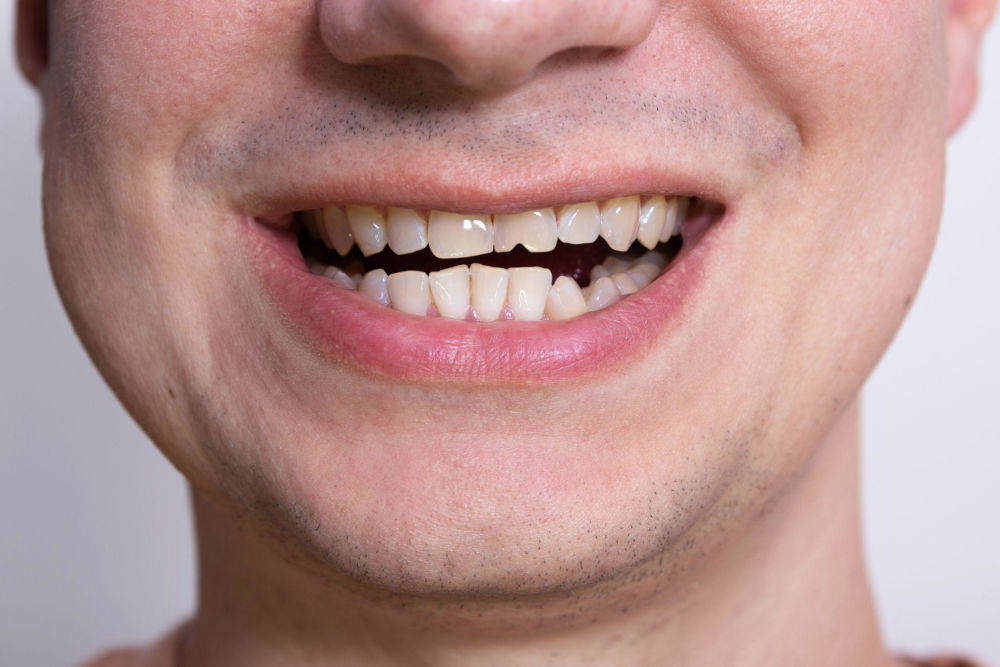
A piece of the tooth has broken away, leaving the rest intact. According to the American Association of Endodontists, chipped teeth account for most dental injuries , and most are repaired by reattaching the broken piece of enamel or bonding a tooth-coloured filling into place. Chips at the biting edge of a front tooth are the classic example, usually from a fall, a sports impact, or biting something unexpectedly hard.
Fractured Cusp
Here, a section of the chewing surface breaks off, almost always around a large existing filling that has been weakening the tooth for years. Because the fracture tends to break away from the pulp rather than toward it, a fractured cusp is often surprisingly painless. The tooth still needs full coverage because the remaining walls can no longer support chewing forces on their own.
Cracked Tooth
A crack runs vertically from the chewing surface downward, sometimes extending below the gumline. The signature symptom is pain on release rather than on the bite itself, and it tends to be erratic, which is why patients often cannot say which tooth is responsible. A cracked tooth caught early can usually be saved with a crown. If the crack has already inflamed the pulp, root canal treatment is needed first. Left alone, the crack keeps propagating.
Split Tooth and Vertical Root Fracture
These are the two outcomes nobody wants. A split tooth is a cracked tooth that has progressed until the segments separate, and a vertical root fracture begins at the root and works upward, often quietly, sometimes only discovered when the surrounding bone and gum become infected. In most split teeth, you can't save the entire tooth, though occasionally you can keep one segment. Vertical root fractures usually end in extraction.
"Patients decide how serious the break is based on how much it hurts, and that is the one thing that does not correlate. Enamel has no nerve supply, so a chip that goes a third of the way through a front tooth can feel like nothing at all. Meanwhile, a hairline crack I cannot even see on an X-ray can be the one that ends up needing a root canal six months later. I would much rather look at it in the first week than in the third month." Dr. Camila Villarreal, General Dentist, Markham Smile Centre
How Dentists Repair a Chipped or Cracked Tooth
Every repair decision comes down to two questions: how much healthy tooth structure is left to build on, and whether the pulp is involved. Everything else, including cost and number of visits, follows from those answers. Dentists work from the most conservative option upward because removed enamel does not come back.
Dental Bonding
Bonding is the workhorse repair for chips. The dentist etches the surface, applies a composite resin matched to your tooth colour, sculpts it to rebuild the missing shape, and hardens it with a curing light before polishing it smooth. The whole process takes 30 to 60 minutes, happens in one appointment, and often needs no freezing when the chip is confined to enamel. Composite tooth-coloured fillings typically last five to ten years before needing a touch-up, and they can be repaired rather than replaced when they wear.
If you kept the original fragment moist and it fits cleanly, the dentist may bond your own piece of enamel back onto the tooth. When it works, the colour match is perfect by definition, because it is your own tooth. It isn't always possible, since the fragment must be reasonably intact and free of contamination, but it costs nothing to bring the piece with you.
Porcelain Veneers
When the chip is large, the biting edge has worn unevenly, or several front teeth are involved, a veneer often produces a better result than repeated composite patching. A thin shell of ceramic is bonded to the front surface of the tooth, rebuilding the edge and the appearance at the same time. It takes two appointments because the shell is made in a dental laboratory, and a small amount of enamel is removed to make room for it, making the decision irreversible. In return, porcelain veneers resist staining far better than composite and commonly last 10 to 15 years.
Dental Crown
Once roughly half the tooth or more is gone, or a cusp has fractured off, nothing bonded to the front or top of the tooth will hold. A crown covers the entire tooth and holds the remaining structure together from the outside, which is the only design that reliably survives years of chewing force on a compromised tooth. Modern porcelain crowns in zirconia or lithium disilicate are strong enough for molars and natural enough for front teeth, and they routinely last well past a decade.
Root Canal Treatment and a Crown
If the break has exposed the pulp, or a crack has inflamed it beyond recovery, the dentist must remove the pulp before restoring the tooth. The dentist cleans and shapes the canals, fills them, and seals the tooth. A crown almost always follows, because a tooth treated this way has lost internal structure and becomes more prone to fracture. Root canal treatment is what makes it possible to keep a tooth that would otherwise have to come out, and the finished result functions like any other tooth in the mouth.
When the Tooth Cannot Be Saved
A small number of breaks are beyond repair: a split tooth where the segments have separated, a vertical root fracture, or a fracture that extends well below the gumline where no margin can be sealed. In those cases, the tooth is removed and replaced, usually with a dental implant or a bridge. Early treatment is designed to avoid this outcome, which is why a two-week delay on a cracked molar genuinely matters.
| Repair | Visits | Typically lasts | Best suited to |
|---|---|---|---|
| Bonding | 1 | 5 to 10 years | Small to moderate chips, front teeth, edge repairs |
| Fragment reattachment | 1 | Variable | A clean break where the piece was kept moist |
| Porcelain veneer | 2 | 10 to 15 years | Larger front-tooth chips, worn edges, several teeth |
| Crown | 1 to 2 | 10 to 15 years or more | Half the tooth gone, fractured cusp, back teeth |
| Root canal and crown | 2 to 3 | 10 to 15 years or more | Any break or crack that has reached the pulp |
| Extraction and replacement | Several months | Implants often 20 years or more | Split tooth, root fracture, break below the gum |
The table cannot show that the choice is rarely yours to make freely. The amount of sound tooth left dictates which of these options will actually hold, and a repair chosen for its price rather than its fit tends to fail early and take more of the tooth with it when it goes.
"The question I get is always whether we can just bond it, and the honest answer depends on what the repair is holding onto. Composite bonded to a healthy rim of enamel will last years. That same composite bonded to a tooth with almost no enamel left will break again, usually while you are eating something you were looking forward to. When more than about half the tooth is gone, recommending a crown is not an upsell. It is the only thing that survives a decade of chewing." Dr. Rob Eisen, DDS, Markham Smile Centre
What Chipped Tooth Repair Costs in Ontario
Fees vary by practice, but ranges across Ontario are reasonably consistent. Bonding a chip generally costs about $150 to $600 per tooth, depending on the repair size and whether it involves a visible front surface. A porcelain veneer runs roughly $1,000 to $2,500 per tooth, and a crown falls in a similar range. Root canal treatment adds about $600 to $1,400, depending on the tooth (front teeth are at the lower end and molars at the upper end), and the crown that follows is billed separately. Extraction ranges from about $150 to $650, and an implant to replace the tooth typically totals $3,000 to $6,000 once you include the post, abutment, and crown.
Insurance treats these differently than cosmetic dentistry, and that distinction works in your favour here. Rebuilding a tooth damaged by injury or fracture is restorative treatment, and most Ontario plans cover it at about 50% to 80%, subject to an annual maximum. Crowns are usually classified as a major service and often require pre-authorization. Patients covered by the Canadian Dental Care Plan have coverage for basic restorative work. Veneers are the exception, since a plan may decline them where a less expensive restoration would have addressed the damage.
Ask for a written estimate with the specific procedure codes before treatment starts and submit it to your insurer for a predetermination. That gives you your actual out-of-pocket figure rather than a guess, and it takes about a week.
What Happens If You Leave a Chipped Tooth Alone
Nothing dramatic happens on day one, which is precisely the problem. The damage accumulates slowly enough that you never have an obvious moment to act, and the repair quietly gets larger and more expensive while you wait.
A sharp edge is the first practical consequence. It rubs against the tongue or the inside of the cheek with every meal, and a chronic traumatic ulcer often develops within a week or two. Exposed dentin is the second. Those microscopic tubules transmit hot and cold straight to the nerve, and they give oral bacteria a direct route inward. Decay that starts at a chip site then progresses under the remaining enamel, where neither you nor a visual exam will spot it early.
People misjudge cracks in both directions. Most visible cracks on back teeth stay stable for years, so the honest answer is not that your tooth will certainly split. A crack is a mechanical defect under repeated load; a minority of them spread, and nobody can tell from the outside which minority yours is in. The American Association of Endodontists is blunt about the end point: once a crack extends below the gumline, the tooth can no longer be saved and has to come out. That is the scenario a check-up schedule exists to prevent, and it is also what turns a $400 repair into a crown, then into root canal treatment plus a crown, and eventually into an extraction and an implant. Along the way, most people start chewing exclusively on the other side, which loads the opposite joint and muscles and often shows up months later as jaw soreness that seems unrelated to the tooth that started it.
How to Keep It From Happening Again
A single chipped tooth is usually bad luck. Repeated chips and cracks are a pattern, and patterns have causes worth finding.
- Wear a nightguard if you grind or clench. Grinding loads back teeth laterally and repeatedly, and cracks in molars in people with no history of injury very often trace back to it. Worn flat biting surfaces, morning jaw tightness, and headaches on waking are the usual signs.
- Use a custom-fitted mouthguard for contact sports. A systematic review and meta-analysis in Sports Medicine found that athletes who did not wear a mouthguard had more than twice the risk of orofacial injury compared with those who did. Stock guards from a sporting goods store are better than nothing but fit poorly enough that people stop wearing them.
- Leave the hard foods alone: ice, popcorn kernels, hard candy, olive and cherry pits, and bones. These account for a large share of fractured molar cusps.
- Stop opening packaging, cutting thread, or holding objects with your teeth. Enamel handles vertical chewing forces well and lateral prying forces badly.
- Ask about replacing large old fillings before they fail. A big amalgam filling acts as a wedge inside the tooth every time you bite, and the cusp beside it is the one that eventually breaks off. Replacing it proactively is far simpler than restoring a fractured cusp afterward.
- Address acid erosion. Reflux, frequent citrus, and sparkling water thin enamel over time, and thin enamel chips more easily. A dentist can spot the wear pattern long before you notice it.
Why Speed Decides How Simple the Repair Is
Almost every chipped or cracked tooth can be fixed. The question is never really whether the tooth is salvageable, but which version of the repair you end up with, and that is decided far more by timing than by how bad the break looked on the day it happened. A chip seen within the week is usually half an hour of bonding. The same chip seen a year later, after bacteria have worked under the enamel or a crack has travelled toward the root, can mean a crown, root canal treatment, or both. Pain is not the signal to act on, because the most consequential damage is often the quietest.
If you have broken a tooth, bring the fragment if you found it, and have it looked at while the options are still simple. Our team at Markham Smile Centre offers same-day assessments when a tooth breaks, and we can tell you in one appointment whether you need a single bonding visit or something more involved. Contact our Markham office to book, and mention that a tooth has chipped or cracked so that we can schedule you appropriately.
Frequently Asked Questions
Can a chipped tooth heal on its own?
No. Enamel is not living tissue and contains no cells that can regenerate, so a chip is permanent until a dentist restores it. Saliva can remineralize very early softening of enamel before any structure is lost, but once a piece has physically broken away, a restoration is the only way to rebuild the shape.
Does chipped tooth repair hurt?
Bonding a small chip that has not reached the dentin is usually done without freezing and feels like having a tooth polished. Larger repairs, crowns, and root canal treatment are done under local anesthetic, so you feel pressure and vibration rather than pain. Mild sensitivity for a few days afterward is normal and settles on its own.
How long does it take to fix a chipped tooth?
A bonding repair takes 30 to 60 minutes in a single visit. A crown takes two appointments a couple of weeks apart, or one longer appointment where same-day technology is available. A veneer takes two visits. If root canal treatment is needed first, the full sequence usually runs three to five weeks from start to final crown.
Can a dentist reattach the piece that broke off?
Sometimes, yes. If the fragment is intact, reasonably clean, and was kept moist in milk or saliva rather than allowed to dry out, it can often be bonded back onto the tooth with excellent results. It is worth finding the piece and bringing it to your appointment even if you are not sure it is usable, since the dentist can assess it in seconds.
Can a chipped front tooth be fixed in one visit?
In most cases, yes. Small and moderate chips on front teeth are the ideal situation for composite bonding, which is completed start to finish in one appointment. Very large chips, or chips where the biting edge has broken across multiple teeth, may be better served by veneers, which require a second visit for placement.
Does insurance cover a chipped tooth in Ontario?
Usually, at least in part. Repairing a tooth damaged by fracture or injury is classified as restorative rather than cosmetic treatment, and most plans cover it at 50% to 80% up to an annual maximum. Crowns often need pre-authorization first. Veneers are less consistently covered, since insurers may argue a simpler restoration would have sufficed.
Should I go to the emergency room for a broken tooth?
Generally no. A hospital emergency department can manage pain and infection but isn't equipped to restore a tooth, so you'll still need a dentist afterward. Go to the hospital if there is uncontrolled bleeding, a suspected jaw fracture, or facial swelling that affects breathing or swallowing. For the tooth itself, a dental office is the right place to go.


See what our patients are saying:
Everyone here is very friendly and provides excellent care. I received a full exam on my first visit, and everyone took time to answer my questions and ensured I felt comfortable the entire time - exactly what you want when visiting the dentist. I highly recommend Markham Smile Centre for anyone looking for great dental care.

There is an ample parking space before you get into the office. The receptionists welcome us friendly with proper COVID-19 procedures in place. The staff worked with patient very patiently and professionally. My teeth cleaning was done by Ying, she explained every detail to me and I did not feel any pain or uncomfortable at all. Thanks to the best team !
It's been a while since I've been to a dentist but I'm trying to get back on track with health in general. Overall it was great going to Markham Smile Centre! The receptionist (I believe she was Kim) was friendly. The hygienist, Ying, was attentive and gentle during the cleaning; x-ray tech (forgot her name, sorry!) was great too. Dr. Sara Riad explained things with good detail. Looking forward to going back!
I was someone who was nervous and anxious about visiting the dentist, but the team at Markham Smile Centre has made me feel SO comfortable. Kim is so patient and helpful and Dr. Hwang and Rory are both so professional and wonderful. They thoroughly explain the procedure to make you comfortable beforehand and are very gentle. I now look forward to visiting the dentist!
I found this place on a whim when I was looking for a new dentist in Markham. My hygienist ying was super nice and her cleaning was very gentle yet thorough. I saw Dr.Jason and he was very nice and informative in regards to what needs to be done and provided me with all the information I needed to make a choice. Would recommend this place to anyone looking for a new dentist, they’re accepting new patients!!
I have been to many dentists in my life, Dr. Jason is easily the best dentist I have ever been too. He does everything he can to make you comfortable no matter the procedure and is a true professional, as does all the staff at Markham Smile Centre. Truly an amazing dentistry
The clinic was clean and the staff was very polite. I particularly liked the fact that everything was explained to me before going in for the procedure so I knew what to expect at each step. The dental hygienist who did the cleaning for me was also very gentle and took my concerns into consideration. I will definitely recommend them.
Upon arriving to the Markham Smile Centre, my son and I were greeted with a warm welcome by the receptionists. The hygienists and Dentist were very gentle and transparent with what they were doing. The hygienist that worked on my 9 year old son was patient and very friendly with him, which helped ease his nerves. Our overall experience was A+.
Since I was little, I have always hated going to the dentist... Its always uncomfortable and unpleasant. These days, visiting the dentist isn’t so bad! Dr Jason, Rory, and the lovely staff at reception make the experience 100x better. I have had absolutely no issues with the gum graft and cleanings that I’ve gotten done here. Everyone is incredibly friendly and helpful, even when I’m calling in or emailing a hundred questions :). I would highly recommend Markham Smile Centre.
Love this place! All the staffs are friendly and Professional and I mean all, cause I've been to most of their office, Markham , Stouffville, North York, and Maple. Dr. Ko is very professional and patient. Whenever I have questions and concerns he would always reply me . I would say this this dental office take care of you all the way. I would highly recommend everyone to come here for any dental works. =)